|
|
|
Education
|
|
|
|
|
|
|
|
|
2011 Power Broker® Winners
|
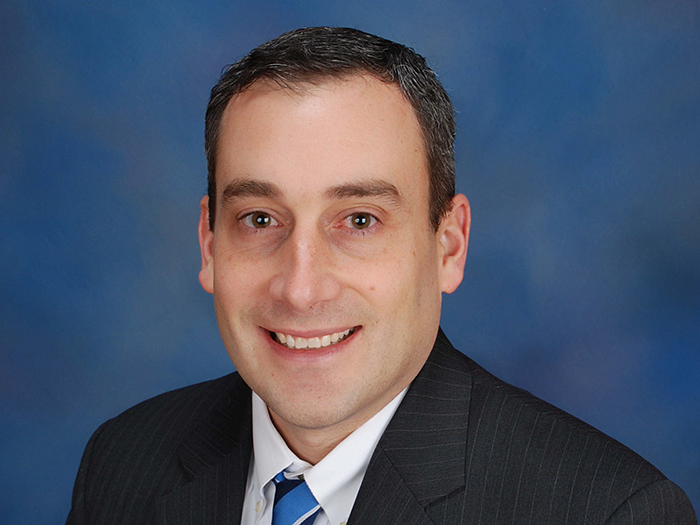
Mark Goode, CIC, CPCU
Executive Vice President and Regional Director
Willis, Charlotte
Making it Happen
Mark Goode, executive vice president and regional director for Willis of North Carolina Inc., is a facilitator on many levels for his school clients.
For the State Risk and Insurance Management Assn., a national organization which faced a significant drop-off in attendance at its conference, Mark Goode spearheaded the creation of a scholarship program to cover the travel costs of risk managers barred from using state money to travel because of budget constraints.
The program funded the travel of risk managers from more than one-third of the states represented at the 2010 conference.
For two K-12 school pooling clients that were facing an exodus of nearly all of their members except those with the poorest loss experience, Goode helped fashion dividend programs designed to not only keep membership intact but also to stop members from going to competing commercial insurers.
Based on pool membership longevity and loss experience, the dividend programs returned $5 million of surplus to pool members¿between 5 percent and 50 percent of individual members' renewing premium. One pool with an 82 percent saturation rate maintained its membership base, and another with 50 percent market penetration attracted 10 new members.
A client noted that although Goode is the organization's property reinsurance broker, he has become the risk manager's "first resource to consult with on any insurance or operational question-the pitfall of being extremely helpful and good at what you do."
|
|
|
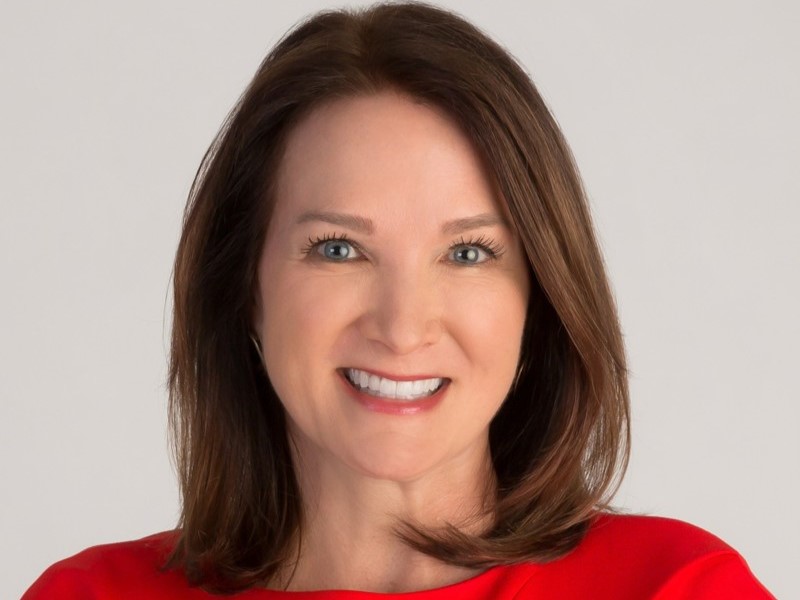
Teena Hostovich, CPCU
Executive Vice President
Lockton, Los Angeles
Doing What's Right to Reshape Coverage
Teena Hostovich provides A to Z service to her higher education clients, saving them millions of dollars by reshaping their property/casualty coverages and benefits programs.
Hostovich has saved clients $2 million annually on average--or 30 percent to 70 percent each--by moving them into loss-sensitive workers' compensation programs and helping them take greater control of their claims-handling.
On the benefits side, Hostovich has helped clients slash up to $1 million in annual employee benefits costs through wellness programs and resources.
She also developed a risk financing evaluation process and manuscripted a policy form that protects clients from catastrophic earthquake and flood losses--at a 25 percent to 65 percent cost savings per client.
Hostovich also has developed cyberrisk solutions and established a consortium of schools that share best practices on risk management and benefits issues.
Phillip Doolittle, COO at the University of Redlands in Redlands, Calif., noted that the university's risk financing approaches don't always generate the highest fees. Still, he said: "Teena provided professional counsel that resulted in the best long-term solution for the university."
Richard M. Haluschak, CFO at the Art Center College of Design in Pasadena, Calif., said Hostovich "knows a lot about the higher education world and is easily conversant about the challenges and strengths we as her client possess."
|
|
|
Responsibility Leader®: Teena Hostovich
Category: Education
Broker Leads Through Extracurriculars
For Los Angeles-based Teena Hostovich, an executive vice president with Lockton, there's curricular, there's extracurricular and then there's extra extracurricular.
First, the curricular part of her life: her day job. For her employer, she's built a higher education practice practically from scratch. Like all good brokers, though, she prefers to let the numbers do the talking.
On the income side, she's likely brought in millions of dollars for her employer. On the expense side, she's saved clients tens of thousands of dollars.
Client Phillip Doolittle, executive vice president and chief operating officer at the University of Redlands in Redlands, Calif., said: "Teena is a good listener. She really pays attention. She waits until she truly understands an issue or topic before she expresses an opinion or provides a recommendation."
Second, the extracurricular part of her life. For that, she uses her talents to educate students at the University of California's Marshall School of Business, where she holds popular workshops. Acting on her passion for helping women find fulfillment in the workplace, she has made a name for herself in Southern California insurance circles, particularly among young women, many of whom mentored by her and now in senior positions in the insurance industry.
Third, the extra extracurricular part of her life refers to her work on the board of Opportunity International, which is dedicated to the elimination of global poverty through microfinance, and to her work with disadvantaged young women, children, and families.
She also brings music programs into inner-city schools and serves on the board of the L.A. Philharmonic Association, as well as on an advisory group of the Friends of California Institute of the Arts.
|
|
|
Richard Moxley, CIC
Vice President
Willis, Mount Pleasant, S.C.
Everybody in the Pool
Some school pools needed help retaining their members. Richard Moxley, vice president of Willis of North Carolina Inc., gave them that--and something for their students.
In a scenario in which budget-challenged schools were willing to leave education pools, Moxley helped devise a dividend program for the pools' members. The dividend gave the pool a tool that not only retained its 125 members, but also attracted new members.
The dividend, based on members' tenure in their pools and their loss history, returned $5 million to the schools in 2010. And another dividend is planned for 2011.
The dividends also bring tangible benefits for the students who attend the schools that are members of the insurance arrangement. Those schools, whose student populations range from 1,500 to 20,000, received dividends ranging from $9,500 to $110,000. In some cases, that meant a school could retain one or two teaching assistants. For other schools, the dividends meant they could purchase dozens of computers.
One pool official, J. Franklin Vail, director of insurance services of the South Carolina School Boards Insurance Trust in Columbia, S.C., observed: "Richard Moxley is a team player, always prepared to support by answering our day-to-day questions or accompany us to visit member districts. He maintains an upbeat attitude even when dealing with those daily issues that can create frustration. When there are questions or differences with carriers, we can count on Richard to effectively intervene and reach and acceptable resolutions."
|
|
|
Eric Pan, CLCS
Area Assistant Vice President
Arthur J. Gallagher, Itasca, Ill.
Covering the Unusual for Colleges
Institutions of higher learning can have some highly unusual risks, and many of those facilities tap Eric Pan's creativity for crafting coverage solutions.
The University of Wyoming, for example, needed some unusual coverage to comply with the contract terms for a large grant from an energy contractor to research whether Wyoming's Powder River Basin coal could be a clean, alternative energy source.
To satisfy the contractor's risk management concerns, the university had to waive its government immunity protection and then procure intellectual property insurance that would cover claims stemming from intentional acts and breaches of contract--two risks that are uninsurable.

Pan, area assistant vice president with Arthur J. Gallagher Risk Management Services Inc., arranged a trust agreement--a self-insurance mechanism--that met the contractor's insurance requirement and was cost-effective for the school.

Meanwhile, Auburn University was looking for trip cancellation insurance to protect its students participating in programs abroad. The need was magnified by numerous events that disrupted travel abroad, including the Iceland volcano eruption and U.S. State Department warnings against travel to specific regions.
Pan manuscripted a policy that covers students' tuition, air fare, lodging and other costs when their schools cancel trips they consider too risky for students.
|
|
|
Carleen Patterson, ARM, CIC
Vice President and Deputy Director
Aon, Washington, D.C.
Less is More When it's Cost Effective
It's a concept that math teachers don't cover in class, but Carleen Patterson, vice president and deputy director-national public sector practice at Aon in Washington, D.C., showed a public school system as well as its county board that less is more--quite a bit more.
In Virginia, the Fairfax County Public Schools and Fairfax County wanted to examine the potential cost efficiencies of combining their property insurance programs, neither of which had consistent coverages. In addition, separate policies for property and boiler and machinery created loss recovery problems for the school system and county.
Numerous brokers were asked to select the insurers they would approach, and to then work with those markets on a combined property proposal.
While the other brokers identified between five and 15 carriers, Patterson selected two that together could provide the necessary capacity and keep the frictional transaction costs low. The proposal Patterson negotiated brought the property and the boiler and machinery coverages together into one policy, which also provided 12 additional coverages and increased 29 sublimits for the school system at a 14 percent premium reduction. The policy added 22 coverages and increased 12 sublimits for the county, and still cut costs 32 percent.
With those results, not unusual for Patterson, the school system and county are exploring the potential of combining other coverages.
|
|
|
Christopher Schwyter, AMIM
Senior Vice President
Willis, Radnor, Pa.
Building Sturdy Relationships
A consortium of private Pennsylvania colleges shared more than the same religious foundation, mission and operating practices. Their risk management and insurance programs also were a mess. Christopher Schwyter was the broker they relied on to clean it up.
Some coverages had glaring gaps. Some significant risks common to higher education weren't covered. For that inadequate level of protection, the schools had assumed high retentions and paid far more than they would with a more efficiently structured--and effective--insurance program.
The restructured program expanded and added important coverages, including professional liability, international liability, employee practices, fiduciary liability and flood.
Schwyter, senior vice president with Willis, also implemented a multistep risk management plan, including loss control measures, that persuaded underwriters to dramatically reduce various self-insured retentions.
When Schwyter was through, the colleges had $50 million of additional liability protection, increased flood coverage, self-insured retentions that were cut from $75,000 to $35,000, and they were paying $200,000 less in premium.
Other college clients also stressed Schwyter's value to their risk management programs.
"Chris is a master at building genuine, lasting relationships between all parties involved in the broker, client, insurer partnership," said Rich Freeman, director of risk management at Lehigh University in Bethlehem, Pa.
|
|
|
FINALIST: Jim Doyle
Executive Vice President
Aon
Tampa, Fla.
|
|
|
FINALIST: Chris Duble
Executive Vice President
Fred C. Church
Lowell, Mass.
|
|
|
FINALIST: Jeffrey Olsen
Senior Vice President
Fred C. Church
Portsmouth, N.H.
|
|
|
FINALIST: John Watson
Executive Director, Higher Ed
Gallagher
Glendale, Calif.
|
|
|
FINALIST: Scott Wightman
Area Executive Vice President
Gallagher
St. Louis
|
|
|
|
|
«Return to the 2011 Power Broker® Page
|
|
|