By B.G. YOVOVICH, a business writer who lives in Chicago
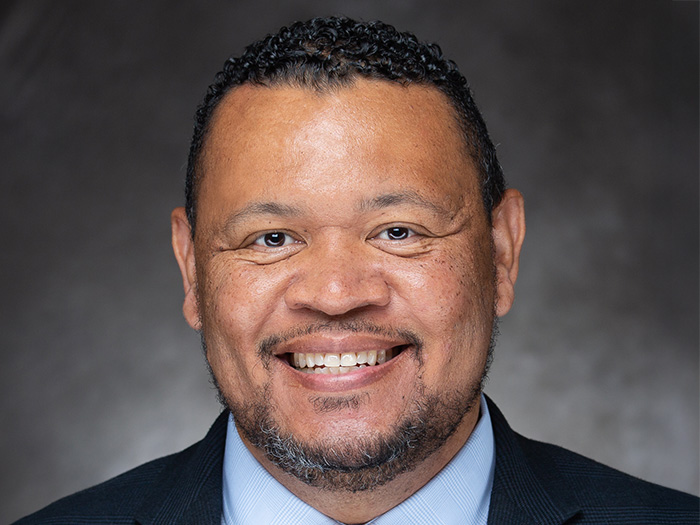
Ingram explained that, early in his career, he had done work in the computer arena.
"I have kept computers as a hobby and try to keep up on things," said the S&P exec, who is planning to install and learn how to use the Linux operating system on the machine.
In an analogous way, Ingram's penchant for hands-on involvement has had counterparts in his work life, including precomputer examples that foreshadow his current ERM involvement.
For instance, in the late 1970s and early 1980s, Ingram worked on ERM-precusor financial management systems that were attempting to allocate capital, to manage return on risk and to develop pricing based on those risks.
"We were doing this even before PCs existed," recalled Ingram. "We used a back-of-the-envelope risk model, and the year before Lotus 1-2-3 came out, I was using paper spreadsheets to do what-ifs. Boy, was I glad when the software became available."
Of course, there have been a lot of other changes in the many years since those early efforts, including recent lessons about ERM that have emerged from the very process of putting together the S&P methodology.
"We spent a couple of months talking to people, and we put together a preliminary vision of an ERM structure. Then we refined it based on feedback," said Ingram. "The biggest changes were in the part of that (that) focuses on emerging risks--or what might be called the unknown unknowns."
Another important issue involved dealing with the tension between the role of ERM in risk control versus the strategic management of risk, according to Ingram.
"The goal of ERM is not necessarily to eliminate risk, but to help everyone to agree on how much and which risk the company wants to keep," he said.
September 15, 2008
Copyright 2008© LRP Publications