By PETER ROUSMANIERE, an expert on the workers' compensation industry and the workers' comp columnist at Risk & Insurance®
Go back 30 years and imagine this scene. Workers have been engaged for several hours, many of them perched upon on scaffolding rising more than 150 feet off the ground. They're constructing a 430-foot cooling tower for a new coal-fired plant owned by the Alleghany Power System. They toil to hoist wet concrete up the side of the tower to its lip and pour it into molds to set.
But some concrete fails to set correctly below the lip and begins to peel away. In an eye's blink, the renegade concrete falls upon the scaffolding, shredding it. Forty-five workers fall to their deaths. Six workers on the ground are crushed.
This April 27, 1978, disaster at the Willow Creek power plant in St. Marys, W.Va., was the largest, sudden construction disaster in American history.
In a macabre dance of fate, West Virginia was also the place of two other horrific events. The nation's worst mining disaster on Dec. 6, 1907, took 362 lives at a Consolidate Coal Co. mine in Monongah, 72 miles to the east of St. Marys.
And, 175 miles northeast of Monongah, hundreds of workers acquired fatal respiratory disease in the late 1920s while boring the Hawk's Nest tunnel through almost pure silica for a hydroelectric plant near Morgantown.
These disasters pale in scale to the fatal toll of working with asbestos, which the RAND Corp. has estimated will eventually contribute to the deaths of 400,000 workers between the 1960s and the early decades of the 21st century.
TODAY'S SAFER WORLD?
In today's apparently safer world, a dozen deaths among a working cohort of workers seems monstrous enough to be called a disaster.
But could truly catastrophic workers' comp events still occur?
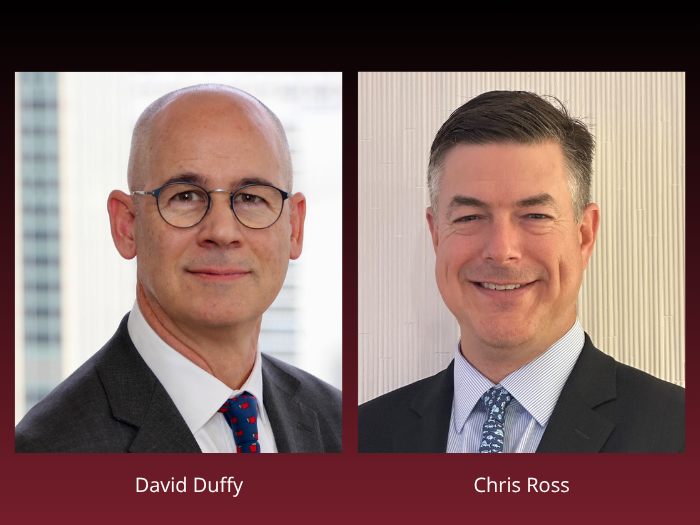
In search for the greatest disaster exposures today for workers in the United States, I went to experts in insurance, medicine and disaster response. Stephen Hackenburg, senior vice president and primary casualty practice leader at Aon Risk Service, selected 10 potential events that pose the greatest worry. Dr. Nathan Cope, chief medical officer and founder at Paradigm, looked at the demands of these events on the medical system. And Eric Holdeman, principal at ICF International for emergency management and homeland security services, teased out the implications for emergency response.
Beyond tragedy for workers, some of these events will inflict harm on the public if they come to pass. All of them could cripple an employer's ability to operate and inflict major financial damage. They most likely will cause losses beyond workers' compensation, perhaps for property and other liability coverages as well.
TERRORISM
On Sept. 11, 2001, terrorists killed 2,973 persons, including 403 New York City public safety responders.
First responders may have limited capacity to respond to the next large terrorism event. Local agencies will be immediately overwhelmed, and if the event is regional, there will be no immediate mutual aid available. It will take days for significant federal assistance to arrive and start having an immediate impact on the ground. Any event that includes radiation as a hazard, even a limited "dirty bomb" scenario, will be very difficult to deal with.
Terrorist attacks are prone to cause posttraumatic stress disorder among survivors, rescuers and by-standers. The laws of many states either exclude this condition from coverage or impose labyrinthine impediments for claimants, who may be encouraged to sidestep the workers' compensation system and file liability claims.

PANDEMICS
A pandemic is potentially the very worst event that could happen for workers--and the public as well. The influenza that erupted in 1918 might have killed 675,000 Americans, among them military personnel who are believed to be the initial carriers of the virus.
The work-relatedness of a pandemic disease may be difficult to pin down. Questions will arise as to where the exposure took place--at work, on the subway, at home. However, once one case is discovered in the workplace and held compensable, then other workers who get the disease will plausibly claim their condition is work-related.
Just as with terrorism mental-health claims, filing disease claims can be so daunting that workers may be inclined to join in potentially massive class-action suits against their employers.
A pandemic will pose immense challenges to emergency responders. Healthcare and emergency response personnel are particularly at risk as they come into contact with people who can transmit the disease.
And because a pandemic may strike everywhere simultaneously, there may be no mutual aid coming from local or regional sources. For an initial period, every community may have to function on its own with the resources than it has at hand. Civil disturbances may occur if critical supplies cannot be provided for medical and other life sustaining categories of supplies.
OCCUPATIONAL DISEASES
Think Hawk's Nest, the asbestos tragedy and the thousands of disease claims arising out of the World Trade Center cleanup.
As these conditions usually take a long time to emerge, detection, treatment and causation often prove a challenge. The varying state laws on coverage of diseases and how these claims must be filed can be very complicated. New York, to take one example, enacted special laws to let World Trade Center claimants get around barriers to claims filing.
Environmental health professionals, mostly working for local public health agencies, typically get involved as soon as symptoms appear. They are trained to manage the removal of hazardous materials. On the other hand, finding medical providers to closely monitor exposed workers can be a hard task.
POLLUTION EXPOSURES
They can happen suddenly. Nine workers perished from a chlorine spill on January 6, 2005, when a train collision in Granite, S.C., ripped open a Norfolk and Southern Railroad tank car containing the noxious chemical.
Indoor air quality defects in schools can sicken teachers, school administrators and students, although fatalities are very rare. At a school opening in the fall of 2007, many teachers and administrators at Houston's Key Middle School were sent by ambulance to hospitals. Probable cause of the event was mold that developed over the summer.
Federal Law requires that toxic substances be recorded and that public safety responders received proper training. However, these specialized teams exist primarily only in fire departments and even then at limited capacity to respond. Communities will need to lean on mutual aid to tackle events that go beyond small spills. First responders and healthcare providers must avoid being contaminated.
NATURAL DISASTERS
These include hurricane, tornado, earthquake, flood, volcano, tsunami and wildfire. For example, onsite employees can be injured or killed by building collapses and consequential fires from an earthquake.
One could dispute a claim by arguing that the loss did not arise out of work but only in the course of work. But what insurer or employer is willing to take the heat of hostile reaction from the media?
Miscues in managing natural disasters can kill first responders. The recent record of most first-responder deaths from a natural event is the July 6, 1994, South Canyon wildfire near Glenwood Springs, Colo., killing 14 firefighters. Rapidly moving fire, aircraft and vehicle accidents, and health attacks are the key risks for wildfires.
Fortunately, experience gained in South Canyon and other wildfires led to a radical change in emergency response, under the name of the federal National Incident Management System. NIMS today is the standard for safe response to all kinds of emergencies. Public safety agencies are now required to plan out well in advance how they will coordinate their efforts.
WORKPLACE VIOLENCE
On June 25, 2008, Wesley Higdon, an employee in a Henderson, Ky., plastics plant, shot to death his supervisor and four co-workers before turning the gun on himself. More than 500 workers are murdered annually in workplace incidents. A relative handful involve multiple murders such as in Henderson.
Workers' compensation laws and judges tend to be sympathetic to the worker killed on the job. In most violence cases, the estates of those killed receive workers' compensation benefits even though homicide deaths don't easily meet the standard criteria that a compensable event must both occur in the course of work and arise out of work.
Yet survivors of workplace violence might also face the challenges of PTSD, when the workers' comp system is more a barrier to recovery than a bridge.
WORKPLACE ACCIDENTS
Think Willow Creek. Recent explosions and fires include the deaths of 17 workers at the British Petroleum plant in Texas City in 2005 and the Imperial Sugar explosion in Port Wentworth, Ga., which took 13 lives in 2007. A fire or explosion might occur in one site and then ravage other nearby sites. The worker deaths and injuries are compensable regardless of the origin on the event.
First responders for any workplace disaster need to know what they are getting into, lest they themselves come to harm. The Vendome Hotel fire in Boston on June 6, 1972, killed nine firefighters when a wall collapsed, making it the most fatal recent first-responder disaster outside of wildfires and the World Trade Center attack.
First-responder resources are usually sized, located, trained and equipped to handle these types of events. However, an accident might overwhelm local public safety teams.
EXTRACTIVE INDUSTRIES
Mining almost deserves a category of its own. It has remained for the decades the most likely location of multiple workplace deaths from single incidents. The Sago Mine collapse on January 2, 2006, in Sago, W.Va., for instance, killed 12 workers.
Workplace safety in mining has improved immensely in the past 75 years. But small mines, such as the Sago Mine, continue to have higher accident rates, compared to large mines.
AIRCRAFT ACCIDENTS
Private-plane travel poses the greatest risk--in fact half of work-related air transportation deaths arise from private-plane crashes involving multiple deaths. On February 16, 2005, a Cessna C-560 on lease to Circuit City stalled while approaching the Pueblo, Colo., airport. The crash killed eight passengers and crew. The National Transportation Safety Board concluded that icing and a flawed stall warning system were largely to blame.
MARITIME ACCIDENTS
With scant occurrence of multiple deaths among workers on ships in recent decades, offshore oil rigs pose the greater danger on the high seas. On February 2, 1982, the Mobil-operated Ocean Ranger rig, 166 miles east of Newfoundland, began to take in water. The crew took to life rafts; all 84 perished. It is believed that they all died from hypothermia in 29 degree water. Not one worker was wearing a protective suit, which have since become standard equipment on rigs and watercraft.
Ship fires are extremely hazardous and require specialized training for anyone responding to them. The last severe event in North American waters on a ship occurred on May 25, 2003, when the SS Norway, dockside in Miami, incurred a boiler room explosion. The fire was put out within an hour by the Miami-Dade fire department. Seven crew members were killed.
So, which one of the top 10 are you exposed to?
January 8, 2009
Copyright 2009© LRP Publications