Emerging Strategies for Risk  
 
Search      Advanced Search | Browse By Topic
Magazine Content
Home
Features
Columnists
Industry Risk Reports
In-Depth Series
Special Reports
R&I One® Content
News & Analysis
Editor's Choice Stories
Resources and Tools
Power Broker TM Directory
Risk Innovators
Insights
Industry Events
WORKERSCOMP Forum TM
Award Nominations
Vendor Directories
Webinars
RSS
R&I Information
Subscription Center
Advertiser Information
About Us
Contact Us
 

Newsletter Sign-up

Click on the name of the free newsletter below to preview:

R&I One®
WORKERSCOMP Forum TM Update
HTML Text
E-Mail Address:


Click here to unsubscribe
Privacy Policy
Preferences

 
Print Email Write to the Editor Reprints

Black Swan or Ostrich?

Black Swan or Ostrich? | Risk & Insurance | I confess--I love cliches. I gain deep satisfaction in using them especially at choice moments. They have such power and the English language is full of them.

By Joanna Makomaski

Countless times in my life a very clever man, my father, delivered gem expressions at pivotal moments. The one expression I heard most often and the one that has rung painfully true on countless occasions is 'a little learning is a dangerous thing'. How brilliant.

I have often wondered how these sayings get embedded in our social fabric and where they originate from? This particular one originates from written works by Alexander Pope from the 1700's. Wow--more than 300 years old and still holds vast wisdom. The question is, are all clichés based on an indisputable truth?

Let's see by revisiting another favorite: 'History repeats itself'. Is that true? With all the relentless mayhem we have been experiencing with the economy, with failed risk taking and forecasting efforts, I have noticed a mini revival and a plethora of references to Nassim Taleb's work from the book The Black Swan.

In his book, Taleb argues that we place too much weight on the odds that past events will repeat and that most of the really big events in our world are rare and unpredictable. He further suggests that economists are false experts, we should never rely on forecasts and that we have only the illusion of control. He also thinks it is immoral to use bell curves and that mathematics skew and limit our view of reality but that we use it anyway to lower the anxiety of risk taking.

Okay, okay, okay. We get it, Mr. Taleb. There is no crystal ball and we should stop trying to build one. But in its absence, what are risk managers to do?

I won't dispute the theories that support a one-in-a 1,000 year-event may be quite fragile and unreliable. Though Taleb's arguments may be sound, I fear their effect somewhat. I fear they may increase paralysis in risk management and further promote inaction. After reviewing some of his work, it came off as defeatist and lacked an emphasis on living with our lack of knowledge and acting regardless.

Here are some thoughts--maybe we can refocus our efforts from desperately trying to determine the exact shape, size and timing of the next big event to building stronger corporate resiliency with inspired continuity plans for when and if those events do strike. I see no harm in noting rare events and storing facts around them and not just the theories.

Nothing can be lost from seeking the counsel of elders. I don't see grave danger in creating a culture that deliberately takes a retrospective view of our history and tries to learn from it. So many examples can be cited from our recent economic nightmare that clearly show us these events are not new to us. This was confirmed by the book I recently reviewed, entitled How to Profit From the Next Great Depression by Dr. John L King, which was written in 1988! Let's not fight the "Hindsight is twenty-twenty" rule but leverage it openly.

We no doubt have a roster of future events whose characteristics we can't fathom, but we do have a millennium of confirmed observations. Pretending they don't exist is just plain silly. To me, a scarier realization is that these black swans may turn us into 'ostriches with heads in the sand'.

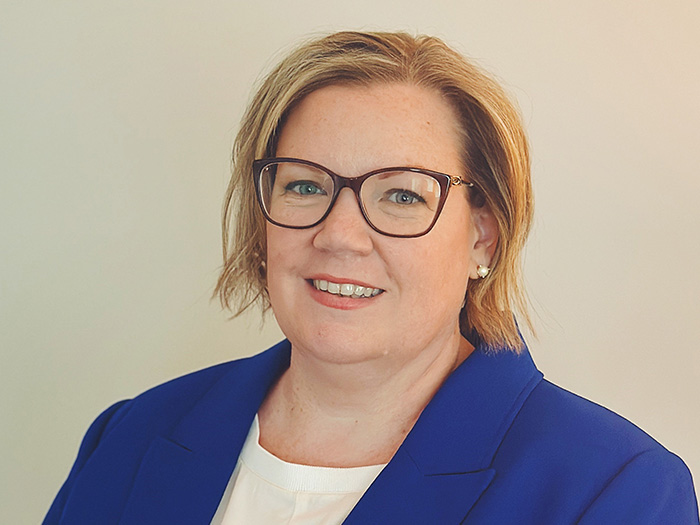
JOANNA MAKOMASKI, the former risk manager for an energy delivery company, is a specialist in innovative enterprise risk management methods and implementation techniques with V3 Advisory Group.


April 1, 2009

Copyright 2009© LRP Publications


RISK logo
 

Back to top

© Copyright 2010 LRP Publications. All rights reserved.