Search      Advanced Search | Browse By Topic
Magazine Content
Home
Features
Columnists
Industry Risk Reports
In-Depth Series
Special Reports
Point/Counterpoint
R&I One® Content
News & Analysis
Editor's Choice Stories
Resources and Tools
Power Broker® Directory
Risk InnovatorTM
Emerging Risks
Top Employee Benefits Consultant
Executives To Watch
Insights
Industry Events
WorkersComp Forum
Award Nominations
Webinars
RSS
R&I Information
Subscription Center
Advertiser Information
About Us
Contact Us
 

Newsletter Sign-up

Click on the name of the free newsletter below to preview:

R&I One®
WORKERSCOMP Forum TM Update
HTML Text
E-Mail Address:


Click here to unsubscribe
Privacy Policy
Preferences


Talking Shop With Zurich North America Commercial's New Chief Innovation Officer

Zurich's Ty Sagalow parses through the difference between product development and innovation.

Print Email Add to Facebook Add to Twitter Add to LinkedIn Write to the Editor Reprints

By CYRIL TUOHY, managing editor of Risk & Insurance®

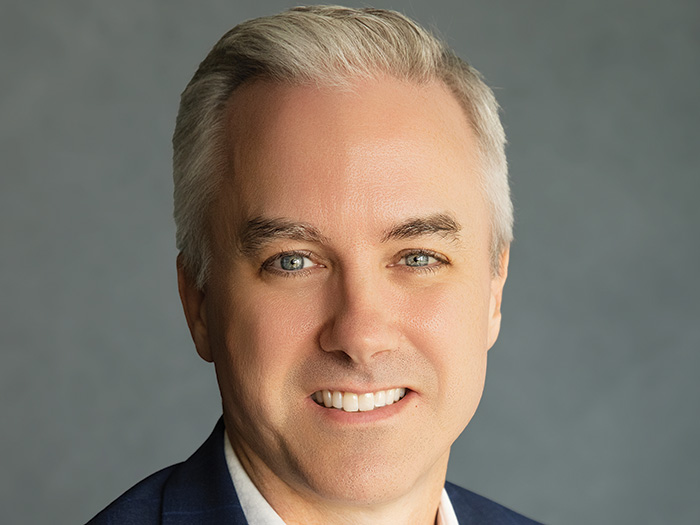
Earlier this year, Ty Sagalow was chosen to serve as the first chief innovation officer for Zurich North America Commercial, a newly created position at the company. In May, Risk & Insurance® Managing Editor Cyril Tuohy spoke with Sagalow to discuss the importance of innovation and how Sagalow intends to approach his new post. Here is an excerpt of the interview.

Q: How did you end up being chief innovation officer at Zurich North America Commercial?

A: I have been in the insurance industry for more than 25 years, and for a long, long time I have known that the only way to sustain profitable growth is to respond to, and anticipate, the needs of your clients. To do that, you need to create a culture of innovation within the organization; at Zurich, what we call customer-centric innovation.

Q: What does it take to have an innovative business strategy?

A: It all begins with knowing that, central to a successful relationship, is understanding, responding to and even anticipating customer needs. Many customers will not say, "I want you to be innovative." What they will say is, "I want you to understand me and respond to my needs as they emerge."

Smart companies know that, to do that, you need to be innovative. At Zurich, we call this connection "customer-centric innovation." So it's very important term to remind yourself that, at the end of the day, what we're trying to do is not just respond to, but also anticipate the needs of our customers and prospects.

Let me give you an example: Henry Ford once said that, if all he did was respond to the wants of his clients and his clients told him what they were, he would be in the business of getting a faster, cheaper horse. But he realized that the ultimate need of the client was faster, cheaper transportation. Therefore, he anticipated the solution to what that ultimate need would be: creating a horseless carriage. That is a very simple example of the difference between true innovation and product development.

Q: So in the property/casualty space, what is it that the clients want?

A: What the clients want is to look at which risk they have in their business, including future potential risks, and to what extent they don't want to totally burden themselves with. So, for example, there is a cap-and-trade market in the Kyoto Protocol, which deals with the selling of CO2 credit. Well you buy the CO2 credit on the futures market, and the way it works now is that the risk of nondelivery is on the buyer.

Now, nobody would think of insurance when they are working in this new market for cap-and-trade of emissions. But, we, in the insurance industry, need to look at that risk and say is there an insurance solution, and here at Zurich and we are developing it. Sometimes it is as simple as connecting the dots between two risks that previously were not connected.

So, for example, in directors' and officers' (D&O) coverage, we've known for a long time that directors and officers are personally liable for allegations of mismanagement. The insurance industry has responded for the last 25 years with D&O policies, but they've always had a pollution exclusion. D&O underwriters have always thought, "Well, we don't know anything about pollution, that's a different type of underwriting; you have to go to environmental underwriters for that."

But with the changing issues of climate change and global warming, directors are now worried maybe for the first time that they could be held personally liable for alleged mismanagement of issues like disclosures of your global footprint.

What we did was to say, "Forget about how the D&O underwriters have thought about it for the last 25 years. There is a connection now between this phenomenon of global warming and D&O liability, and as the insurance we need to put these two things that were unlike each other in the past because, today, they have a connection."

Q: Was there a chief innovation officer at Zurich before you came on, or was the position created for you or held by somebody with another title?

A: No. It was created when I came on-board. There were people that headed up product development, but if you look at innovation, it goes beyond products and services. Some of the best innovations in the world are business models. Look at Apple.

What was so special about iPod? It was not the iPod, meaning the iPod was an improvement in MP3 players, but that is all it was. It was called an incremental innovation. It just took what was already out there, MP3 players, and made it a little cool looking and it worked a little bit better.

That wasn't the true innovation of Apple. The true innovation of Apple was iTunes and the connection, what's called the business model innovation between the product, the iPod, and a method of doing business such as iTunes. Apple actually convinced people to pay 99 cents for things that they previously got free, granted it was illegal, but it was still free. They did that by making the strategic connection between the iPod and iTunes to be an overwhelming value proposition.

So, what does business model innovation mean for insurance? Our research determined that in some segments, such as healthcare, there is a great benefit from the customer point of view of a single point of contact in an insurance carrier for all their insurance needs. Historically, this was not the way insurance carriers modeled themselves. You had a D&O underwriter, a property underwriter, an environmental underwriter, all different, all in different locations. Each dealt with the customer on an independent basis.

Once you view life from the point of view of your customer, once you look at customer needs, then you realize that a change in business model is necessary. For that reason, we are developing for launch in the early fourth quarter a new business model for our healthcare business giving a single point contact and combined application form for most of our insurance coverages.

Q: There seems to be a fair amount of innovation in insurance, but a lot of it in the public mind is that insurance is still fairly stogy and staid and uninnovative. There seems to be a disconnect there.

A: There is a disconnect, but at the end of the day, perception is reality to the customer. The insurance industry comes up with rewritten policies; you have a new property policy or a new type of auto insurance. It's incremental innovation. It is not that there is a total lack of creativity, but it is small and we have convinced ourselves that is where we find innovation. Many of our clients have been convinced that that is innovation.

Outside the insurance industry, that would be minor stuff. At Zurich we have decided to raise the bar, and we are already done so in launching the first environmental mismanagement coverage in a D&O policy, for example.

Q: In your experience, the most innovative people are the ones on the ground, the ones in middle management or the ones at the very top?

A: It's not middle management in my experience. It is the people on the ground, who talk to the customer. By hearing what the customer is in pain about, they learn more. It is different than asking a customer, "What do you need?" If you ask the customer what they want, they will say, "I want a cheaper, faster horse." If you say to them, "What's the job to be done?" They will say, "I need to get from here to the next town in an hour, and I don't know how to do it because I keep on making the horse go too fast and then my horse dies."

Then there are the ones way on top, the Steve Jobs of the world. Those are the guys that seem to have a sixth sense for the world around them.

Q: Are there people like that in insurance?

A: I believe so. I think that John Amore is one, Mike Foley and John Parker is a third. They are creative geniuses in insurance. They may not be as well known as Steve Jobs but in my view just as capable. Then we go back to the guys on the ground, people talking to clients, talking to brokers every day.

There are also ideas all around you if you know where to look. You read an article in the Economist about the cap-and-trade market and you think insurance. Most people don't, but I do. There are risks all over this world and it goes with the human condition; the job of the insurance industry is to take those risks and spread them among all of society.

Q: A lot of innovation is incremental rather than transformational.

A: Exactly right. There's nothing wrong with incremental innovation. We have a commitment to our clients that we do not want them to have a policy that is more than three years old in terms of when it was drafted, and we have not reached that point yet, but we will soon. If you are a chief innovation officer, what you are looking for is a portfolio of innovation. Some of it is incremental, some of it is transformational, and some of it is breakthrough. Some of it is product and services. Some of it is business model. Fundamentally, the job of a chief innovation officer is to make sure that there is that type of portfolio of innovation.

Q: How do you tell if a company is innovative? What are the signs? That the marketplace is accepting it? That shareholders are accepting it? What tells you whether you are innovative or not?

A: It's a combination. Ultimately, your customers will tell you. But they won't say, "Wow, you're innovative." It is rare that a customer says, "I want an innovative company." What they will say is, "I want a company that meets my needs." What I say back is, "I'll meet your needs before you even know what your needs are." Now, that happens to be innovation--they don't' care what it is called. The other way you know is by talking to the employees of your organization and listening to what they think is the value proposition of your organization is.

Q: What are some of the roadblocks that you have found in your 25 years of working in insurance to innovation? I'm sure you've seen lots of great ideas that have never gotten past the next cubicle for whatever reason. Those kinds of things are interesting as well.


A: It is consistent with what we have talked about so far. Why do things not work? One, you have a culture of fear, people are afraid to think out of the box. So that guy in the cubicle who comes up with an idea and says, "Well, I'm not going to tell anybody, it's dumb or I'll get somebody else in trouble, or its not my job."

The second thing that does not work is if you do not have a process. So you have a guy who comes up with a great idea, not that he is afraid to tell anybody about it, but he does not have the faintest idea whom to tell. Yes, he can tell his boss, but his boss doesn't know what to do with it. It is not like you can go on the Intranet of your company and there is a box there that says submit your ideas here. Innovative companies have electronic suggestions. We have that right here. It goes right to somebody on my staff, and they return that person's phone call to talk about the idea within a week. Again, you have to get that message across so you have to have the process. If you don't have the process communicated, people won't know that the process exists.

Then you always have some companies that have too much of a silo mentality. You get the "not invented here mentality," the we-don't-do-that-for-a-living mentality, and then the fear mentality. If you eliminate all those and you have a process so that people know what to do with an idea when they have it, and they see a result ... then you are going to get a pipeline because everyone is creative.

Q: How do you reconcile the tension or the conflict between being creative and the efficient discipline of a silo?

A: Silos that are highly efficient at doing one thing will continue to be that way until that thing is not needed anymore; then we'll be out of a job and we have many examples of that. Kodak owned the camera industry, but ... with the idea of a digital camera, they said, "We don't do digital cameras for a living. We do analog cameras, and we're really good at it. We control the market. We have a highly efficient process." Look what happened to them.

The important thing is for innovation and insurance to come together. It does not have to be merely incremental innovation, but part of a portfolio approach. That's the role of a chief innovation officer within the insurance industry today ... and I'm happy to be one of the first chief innovation officers in the industry. I think it says something about Zurich as an organization to create that position.

September 15, 2009

Copyright 2009© LRP Publications


RISK logo
 

Back to top

Entire contents copyright © 2013 Risk and Insurance® All rights reserved. May not be reproduced in any form without written permission.