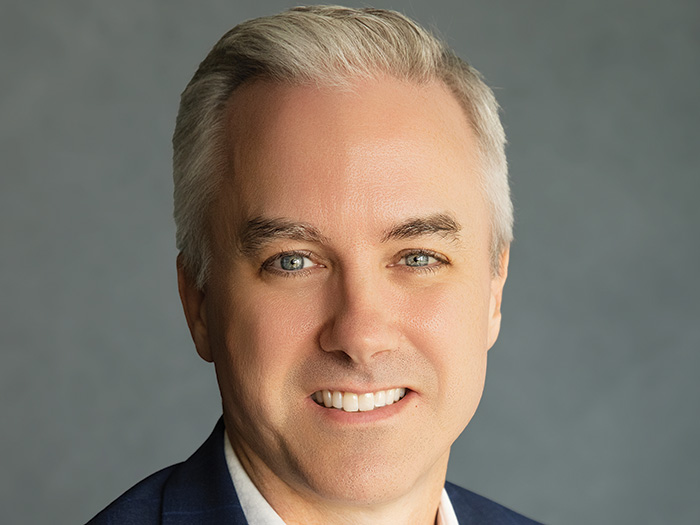
By STEVE MCGILL, chairman and chief executive officer of Aon Risk Services, the risk management and insurance brokerage business of Aon Corp.
In the past, risk management was centered on fixed assets, picture a sleepy industry focused on fire insurance, for example. Douglas Barlow, the legendary insurance risk manager at Massey Ferguson and the first risk manager to be inducted into the Insurance Hall of Fame, developed the idea in the 1960s of "cost of risk," linking an organization's retained losses, insurance premiums, risk control costs and administrative costs to sales, assets and shareholder equity.
This innovative thinking, along with marked changes in the world at large, dramatically started to evolve and elevate the role of the insurance broker from that of an insurance intermediary to a true risk adviser.
Today, risk can be found in complex supply chains, intellectual property rights, data centers and alternative entities such as joint ventures, partnerships and outsourced services. As a result, the industry now faces a dramatically different landscape. The interconnectedness of the global business environment has introduced an unprecedented degree of intricacy to the risk profile of an organization.
In response, insurance brokers have shifted in structure and approach from local and regional organizations to global firms, with the expertise and geographic presence to match. Specialization has become the new norm, and can be found in processes such as enterprise risk management, risk modeling, risk control and international risk management.
We have moved from an industry filled with generalists to one comprised of specialists, whether focusing their particular expertise in products like property, casualty, network risk, management liability, professional liability, surety, or in industries like construction, energy, technology, financial services, pharmaceuticals.
The ability of today's broker to immediately step forward and support the organization as a risk adviser with fact-based insights and scalable resources can mean the difference between surviving an event and prospering in spite of it.
As we have learned through the events of the past 19 months, the complexity of risk today ultimately heightens an organization's exposure to extreme, catastrophic, Black Swan events, which were previously inconceivable in nature.
The ultimate risk management nightmare that can result from such an event requires more than simply developing a response; it requires developing that response while simultaneously addressing and dealing with the shock of experiencing an event having an impact of staggering proportions.
The challenge of managing such a situation decades ago would have been even more overwhelming and devastating for an organization as most firms lacked both the ability to be nimble and the knowledge of their overall risk profiles. With the current rise in popularity of enterprise risk management (ERM), an organization has the confidence and reassurance that its finger is on the pulse of the financial, strategic and operational risks it faces. As the role of the insurance broker has evolved, the broker's relationship with carriers has followed suit. Over the last several decades, poor underwriting performance had been the most significant factor deterring a broker from placing coverage with a given carrier.


The broker's selection of carriers from which to seek quotes focused principally on the terms carriers were able to offer a particular client. Carrier solvency rarely entered the discussion. The assumption was that the financial stability of the carrier--at least the admitted ones--was being monitored by regulators and would remain relatively stable.
In some industries, such as real estate, for example, risk managers may have had more of a focus on setting minimum thresholds for agency ratings, but by and large, if a carrier was licensed in a given jurisdiction and not placed under regulatory supervision, the carrier often met the minimum thresholds of many brokers and clients.
Sure, there were some notable concerns; the 1980s saw a rash of huge insolvencies. Some brokers also noticed a trend thereafter: When there was a catastrophic event, be it market decline resulting in diminished return on investments, major earthquakes, hurricanes, massive toxic tort litigation or an event like Sept. 11, 2001--or some combination thereof, the fallout precipitated the insolvency of both admitted and nonadmitted carriers.
Certain brokers eventually established market security departments to actively monitor regulatory actions, ratings agency perspectives and carrier spread of risk, and to develop minimum standards for the markets with which they would transact business. However, these were the exception, not the rule. In recent years, the credit crisis has created an unprecedented level of volatility in carrier financial performance, driven in large part by uncertainty regarding investment results, diminished capital surplus and liquidity of invested assets, in addition to constrained access to capital.
Now more than ever, with the financial services industry as a whole under the regulatory microscope, there is a heightened awareness of the importance of market security. The leadership and board levels of organizations are taking notice. Ratings agency perspectives have come under scrutiny and it is no longer enough for the risk manager and insurance broker simply to rely upon those opinions when determining carrier selection.
In order to be successful in this new paradigm, insurance brokers can enhance due diligence efforts in connection with the carrier selection process and provide clients with innovative tools and insights supported by real-time data.
Although the insurance broker cannot act as a guarantor for the insurer's solvency, organizations today need to know they can look to their broker to assist them in distilling insurmountable volumes of information into meaningful business intelligence, and articulate the nuances of carrier financial performance in a way that allows the organization to more effectively address the concerns of internal stakeholders, while making informed decisions that balance market security, coverage and price.
Indeed, gone are the days when advice or a purchasing decision could safely be based merely on the status quo, anecdotal evidence or gut. Fact-based decision-making is a must and data harnessing is now considered a prerequisite for those in the industry.
Senior management and boards today demand risk reporting on an increasingly frequent basis in order to quickly identify and address costly trends. With the growth of technology over the years resulting in a 24/7 news environment, today's understaffed risk management teams face a major challenge in managing and analyzing the overwhelming volume of risk-related data generated by insurers, brokers, third-party administrators, captives, actuaries, lawyers and internal departments, among other sources.
To meet those demands in this era of streamlined workforces, the ability to easily consolidate and manage data from multiple sources, as well as craft a timely response, is critical. The ideal risk technology solution stimulates collaboration between the risk manager, insurance broker and the insurance market.
Thankfully, risk information portals are now available to improve communication among the organization, broker and underwriters by collecting and making policy wordings, agreements and statements of value easily accessible.
Rather than having the separate spreadsheet files or systems of yore, today's risk management information systems empower risk managers to view, update, validate, maintain and report from identical data sets. A well-embedded risk management information system (RMIS) leads to the ability to view current data, track and manage changes, and ultimately guard against data compromise and corruption. As risk awareness and ERM are increasingly recognized as top organizational priorities by today's business leaders, the risk management team comprised of the in-house manager, insurance broker and carrier partners are expected to have a solid grasp of the organization's risks and opportunities at all times.
New risks seem to emerge every day, with terrorism, pandemic, cyber risk, employment practices and the credit crisis among those topping the current list. To the benefit of all parties, risk modeling tools have opened the door to a renewed appreciation for the total cost of risk concept, which now looks a bit different than Barlow's cost of risk notion of a half-century ago.
It could have taken hours to run a single risk model scenario even just 10 years ago. Today, brokers can help risk managers evaluate the effectiveness of potential risk management strategies in minutes, giving them the ability to swiftly implement any necessary changes.
The world continues to grow riskier, and today's insurance broker must embrace every chance to anticipate, evolve and innovate. If the broker community does this, there is an exciting opportunity ahead in this industry.
May 1, 2010
Copyright 2010© LRP Publications