Search      Advanced Search | Browse By Topic
Magazine Content
Home
Features
Columnists
Industry Risk Reports
In-Depth Series
Special Reports
Point/Counterpoint
R&I One® Content
News & Analysis
Editor's Choice Stories
Resources and Tools
Power Broker® Directory
Risk InnovatorTM
Emerging Risks

Top Employee Benefits Consultant

Executives To Watch
Insights
Industry Events
WorkersComp Forum
Award Nominations
Webinars
RSS
R&I Information
Subscription Center
Advertiser Information
About Us
Contact Us
 

Newsletter Sign-up

Click on the name of the free newsletter below to preview:

R&I One®
WORKERSCOMP Forum TM Update
HTML Text
E-Mail Address:


Click here to unsubscribe
Privacy Policy
Preferences


Federalize for Occupational Disease

For occupational illness--such as what will happen to workers in the BP oil-spill cleanup--the workers' comp system doesn't work. Federalization is the solution.

By Peter Rousmaniere

Print Email Add to Facebook Add to Twitter Add to LinkedIn Write to the Editor Reprints

It's quite possible that people cleaning up the Gulf oil spill will wind up with a boatload of illness and injuries, and it's possible that Congress and the White House will have to come to the rescue at enormous taxpayer expense. All this is because the insurance industry and state regulators of workers' compensation systems aren't doing their jobs.

There's nothing new here, as twice before in the last 10 years the workers' compensation system has broken down catastrophically. The ultimate possible outcome: Federalization of what is, in concept at least, a private-sector responsibility.

What exactly is this serial mess, and why can't we clean up our act?

The system of private-sector insurance with state government oversight is designed to marshal the best available resources to prevent and cure work injuries and illnesses in concert with privately funded, competitively awarded insurance. This makes employers and their insurers jointly operationally and financially accountable.

It's an admirable social contract--in concept. But for occupational diseases, the track record has been sodden.

The states and workers' compensation insurers have for decades weaseled on the promise to protect workers from occupational illnesses and to honor their claims.

Nuclear-weapon industry workers struggled for years to get their claims honestly handled within the state-based workers' compensation. Finally, in the closing months of the Clinton administration, Congress stepped in to federalize and fund these workers' compensation claims. It then took federal agencies much of the past decade to adjudicate these claims efficiently.

That was the first system failure.

The World Trade Center clean-up workers labored under dangerous conditions after the Sept. 11, 2001, attacks, and then they had to pursue their disease claims through New York state's labyrinth of dispute resolution.

New York City purchased a workers' compensation insurance policy from Liberty Mutual to cover ground-zero workers. Both the city and Liberty Mutual have remained through the years tight lipped about that policy. Where was safety? Where was claims management? Was Liberty a victim of a client from hell or did it fail, in effect, to walk its talk of taking responsibility?

That was the second failure.

BP has been beaten pillar to post about a cost-cutting mentality that weakened safety controls, contributing to safety failures in Alaska; a 2005 explosion in Texas City, Texas, which killed 15 workers; and now the Deepwater Horizon environmental catastrophe.

On June 11 of this year, 14 occupational medicine experts working in New York City wrote to Hilda Solis, the U.S. Secretary of Labor, asking that, with regard to the Gulf oil-spill cleanup, she "prevent a repetition of costly mistakes made in the aftermath of September 11."

They asked the federal government to "provide the maximum level of protection to workers and residents ... even in the face of uncertainty of exposures ... derived from the released oil and its clean-up."

They also asked the Occupational Health and Safety Administration (OSHA) to "register clean-up workers and potentially exposed residents and offer medical surveillance including baseline health information and lung-function measurements before worker involvement in clean-up."

The 14 occupational medicine experts stressed that such registration and surveillance should not be sponsored solely by BP.

(OSHA and the National Institute for Occupational Safety and Health (NIOSH) have already released interim guidance for protecting Deepwater Horizon response workers.)

Their stinging dismissal of BP likely will extend to other employers engaged in the clean-up and their respective workers' compensation insurers. Overly judgmental as that may be, the letter's signatories are writing from their experience.

New York's Mt. Sinai Hospital--which treated and monitored thousands of ground-zero clean-up workers and whose medical director, Dr. Michael Crane, signed the letter--reportedly lost faith that workers' compensation insurers would pay for medical monitoring of their claimants.

Once again, with respect to employers and workers' compensation insurers, where is safety? Where is claims management? It is prudent and sad to expect that disease claims will be tortured by the dispute resolution process of the respective Gulf states.

Each party to this impending system failure--employer, insurer, state regulator--will predictably avoid looking at the fundamental problem, which is that the state-based system for occupational illnesses is beyond repair. The reason we can't reform the management of occupational diseases is twofold:

No one party will take the lead.

Second, we just love this moral hazard whereby some one else pays the check at the end of the evening. Note that the recent three-quarters-of-a-billion-dollar settlement of liability claims for the WTC rescue, recovery and clean-up workers was federal money. This time, it may be BP.

The system is broken.

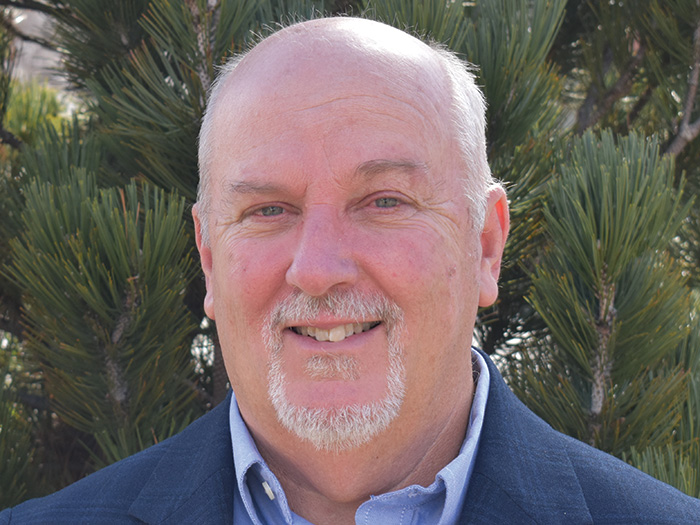
PETER ROUSMANIERE is an expert on the workers' compensation industry.

July 1, 2010

Copyright 2010© LRP Publications


RISK logo
 

Back to top

Entire contents copyright © 2013 Risk and Insurance® All rights reserved. May not be reproduced in any form without written permission.