Remote Workers Need More Than Cookie-Cutter Safety Strategies
But by using the unique characteristics of remote workers, employers can ensure their off-site employees are doing their jobs safely and staying injury-free, according to an organizational safety consultant.
"The biggest message I give to organizations is you've got to select and focus on remote workers as their own unique breed of cat," said Robert Pater, managing director of SSA/MoveSMART in Portland, Ore. "Play to their strengths."
The number of people working in alternative locations continues to grow. The information technology research and advisory company Gartner Inc., predicts that the number of remote workers worldwide is expected to surpass 46 million by 2011.
Companies are employing off-site workers for a variety of jobs, including route sales representatives, delivery people, installers, long-haul drivers, pipeline workers, couriers, foresters, and energy and utility workers. Most are transitioning, meaning they're moving from place to place quickly. Others, including telecommuters, tend to work out of their homes.
The challenge for employers is making sure these out-of-sight employees don't sustain unnecessary injuries and drive up their workers' comp costs. The injuries sustained by off-site workers are similar to those seen in on-site employees; slips, trips and falls; driving-related accidents, and soft tissue injuries. One of the challenges to mitigating these injuries is that off-site workers are on other people's turfs or in their own homes.
"You can't change your client's environment," Pater says. "Remote workers such as telecommuters sometimes get very resistant to being told to change their own homes."
Consider remote workers their own safety managers, he says. What you want to do is put them in control of their own safety.
"Remote workers are experts," Pater says. "They're self-motivated. They tend to be more self-motivated than plant-based workers." By playing to those qualities, he says employers can persuade remote workers to practice safety strategies.
"Instead of policies and procedures and monitoring people who are very difficult to monitor, our focus is that these people already have more self-control," Pater says. "Most have a sense of pride that they can do things on their own. If you recognize the strengths of people, you can use that to persuade them to maintain their safety."
Rather than telling off-site workers how to behave safely, Pater suggests giving them the necessary skills and showing them how to use them to be safer.
Safety skills.
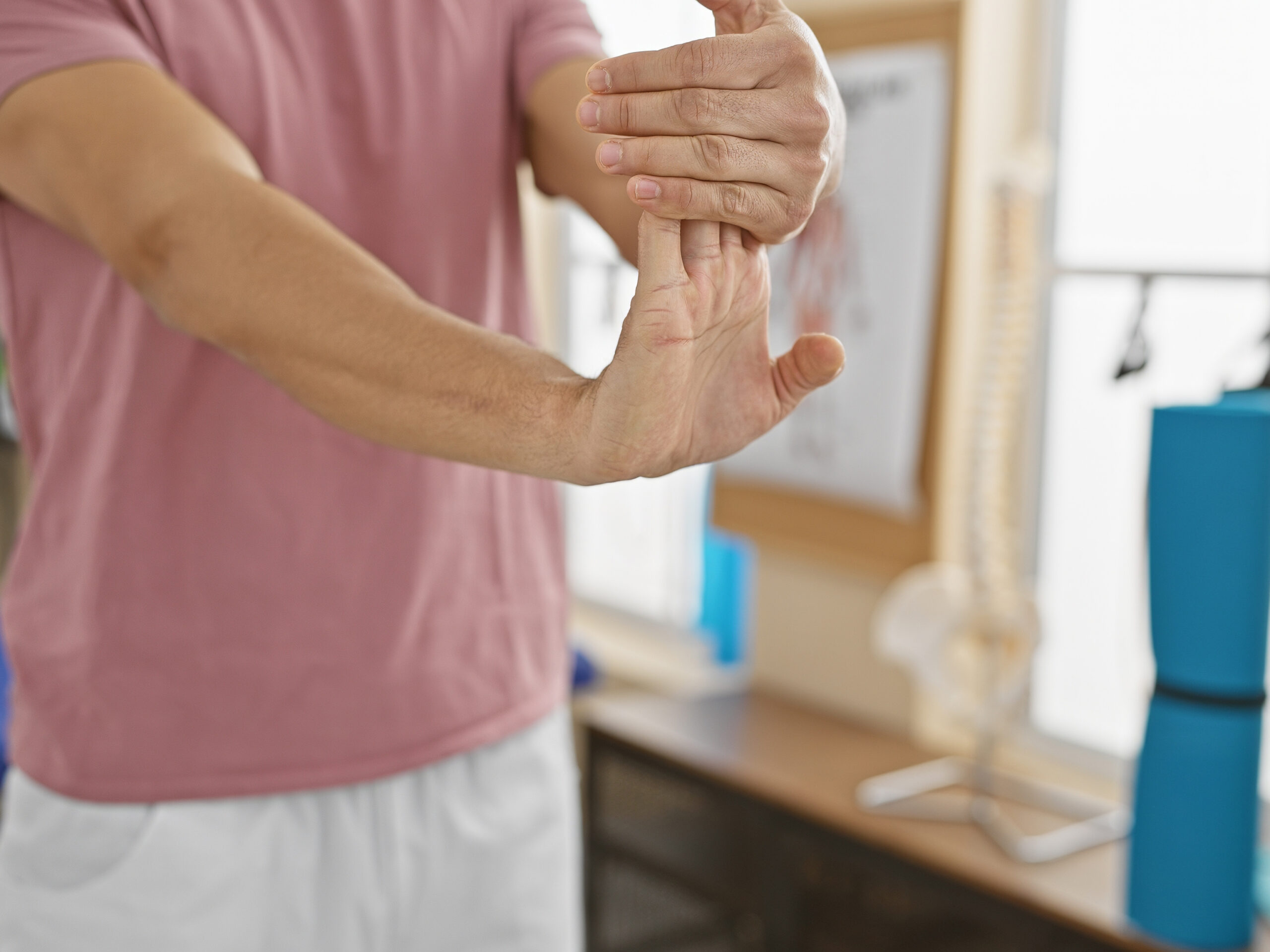
Pater teaches a variety of physical and mental skills to promote safety. Among the most important physical skills he says is alignment; of the neck, elbow, wrist, etc.
Teaching alignment skills goes something like this: Imagine you are standing, as many remote workers often do. Look at your feet; are they parallel or is one foot forward of the other? Pater says people typically stand with their feet parallel.
"It's hard to sustain their balance and they wobble," he says. "Often people try to overcome that by locking their knees," which makes the lower back tense and breathing more shallow.
By showing people that putting one foot slightly forward, they can see their knees are not locked, their lower backs are less tense and their breathing is generally deeper. But the key is to actually show the worker this skill.

"I don't believe something without interaction is likely to change behavior," Pater said. "Buy-in is especially important for remote workers."
Another safety skill he teaches is positioning to improve leverage and strength. "Many injuries occur in fall and winter while exiting a vehicle," he says. "Many people lose their balance and have a bodily reaction injury. They may skid -- not fall, but have a loss of balance . . . people catch themselves and often have soft tissue injuries."
Mental skills are equally important. Paying attention to small hazards is primary.
"Generally, what causes trips is small objects at knee level and below," he says. "Something slows down my progress. Could be a snag in the carpet. My upper body has forward momentum and goes forward."By noticing surroundings, workers can avoid falls.
Changing surfaces effectively also requires a mental skill. Moving from grass to concrete or concrete to linoleum causes a change in what Pater calls the 'grab factor.' "If I'm moving with a certain momentum and change surfaces, I've got to make an adjustment." he says. "For example, if I move from a slick surface to carpeting it won't cause me to slip but it may cause me to trip."
Another mental strategy Pater strongly advocates is the ability to self monitor. In that, the person asks himself how he is feeling, whether he has any weak spots and what he can do differently to prevent potential injuries.


Read more at the WorkersComp Forum homepage.
November 22, 2010
Copyright 2010© LRP Publications