Search      Advanced Search | Browse By Topic
Magazine Content
Home
Features
Columnists
Industry Risk Reports
In-Depth Series
Special Reports
Point/Counterpoint
R&I One® Content
News & Analysis
Editor's Choice Stories
Resources and Tools
Power Broker® Directory
Risk InnovatorTM
Emerging Risks
Top Employee Benefits Consultant
Executives To Watch
Insights
Industry Events
WorkersComp Forum
Award Nominations
Webinars
RSS
R&I Information
Subscription Center
Advertiser Information
About Us
Contact Us
 

Newsletter Sign-up

Click on the name of the free newsletter below to preview:

R&I One®
WORKERSCOMP Forum TM Update
HTML Text
E-Mail Address:


Click here to unsubscribe
Privacy Policy
Preferences


Armed Vs. Bermuda Forms Insurers

Risk managers can find much-needed insurance capacity in Bermuda. What they also can get is a lengthy and expensive arbitration process should coverage disputes arise, however.

By Douglas Cameron

Print Email Add to Facebook Add to Twitter Add to LinkedIn Write to the Editor Reprints

Risk managers of larger U.S. companies frequently purchase catastrophic liability coverage from Bermuda insurance companies under insurance policy forms drafted by those companies. These Bermuda Forms require arbitration of disputes in London, which presents hurdles to securing coverage that may not be fully appreciated at the point of purchase.

U.S. risk managers and their legal counterparts need to understand these complexities before initiating arbitration to ensure they get the insurance to which their companies are entitled.

A Bermuda Forms insurance company typically selects an English lawyer as its arbitrator, and insists that the chair be an English QC, meaning that, even if the policyholder picks a prominent lawyer or retired judge from the United States, English lawyers will be a majority on the three-person panel. This raises two points of concern to risk managers more familiar with resolution of coverage disputes under U.S. law. One, English lawyers come from an environment which is significantly less policyholder friendly than the United States. Two, English lawyers frequently find it difficult to understand the realities of litigating tort cases before U.S. juries. They may ascribe monstrous judgments or large settlements to the bad (i.e., uninsurable) conduct of the policyholder. As such, it is critical for U.S. policyholders and their counsel to partner with English lawyers to ensure the case is packaged for an English audience.

Bermuda Forms essentially mandate application of English law. It is true that Bermuda Forms contain choice of law provisions selecting New York substantive law. But this is only half the story, as such provisions also eliminate application of the rule requiring ambiguous language to be read in favor of the policyholder, as well as prohibit recourse to extrinsic evidence--often, the best evidence for policyholders--to resolve ambiguities.

While this sounds relatively innocuous, it can have a major impact. For instance, most New York decisions on substantive coverage issues reference the doctrine of ambiguity, at least as a back-stop. Bermuda Forms insurance companies exploit this by arguing to arbitration panels that they must disregard all such cases. Then New York law becomes essentially English law.

Complicating matters is that Bermuda Forms arbitrations are confidential, and there is no formal body of common law from the hundreds of awards on Bermuda Forms over the past two decades. On the other hand, Bermuda Forms insurance companies litigate many of these cases and are aware of how certain issues have previously been decided. Indeed, they may very well have picked their arbitrator on this basis. Policyholders in Bermuda Forms arbitrations face significant disparities of information, which can be addressed only by hiring English or U.S. counsel familiar with the relatively small group of lawyers who serve as arbitrators in Bermuda Forms disputes.

U.S. risk managers should also be aware that the costs of the panel, and of arbitrating in London, are enormous. Through the life of even a medium-sized arbitration, each panel member may charge up to $150,000. Costs to transport and lodge U.S. witnesses and lawyers are similarly large. Further, policyholders typically hire English counsel along with one or more English barristers to present the case. While the process is expensive, U.S. policyholders cannot shy away from hiring English counsel. They are well worth it, and the Bermuda Forms carrier will certainly hire such counsel.

Procedurally, Bermuda Forms arbitrations are also governed by English law. This, in turn, has several implications. For instance, under English law, the loser pays the attorney fees and costs of the other party, which, as noted above, can be enormous. Discovery (or "disclosure") in arbitrations differs from that in domestic litigation. There are no depositions. Direct testimony, or the case-in-chief, is handled by means of written witness statements exchanged in advance of the hearing. Witnesses for whom witness statements are provided are then subject to being called for cross-examination at the main hearing. Again, arbitrations in London are quite unlike coverage trials in the U.S., making it critical to have counsel experienced in litigating under English procedural law.

Despite the fact that one of the supposed benefits of arbitration is that it is speedier than litigation, this is not always borne out. From sending the letter demanding arbitration, through selecting the panel (two to four months), filing points of claim, points of defense and other preliminary pleadings (two to four more months), holding the initial hearing, responding to disclosure (three to 12 months), resolving objections to disclosure (up to six months), filing witness statements and reply witness statements from lay and expert witnesses (another six months), completing the prehearing procedures and holding the hearing (two months), holding another short hearing for consideration of final submissions (three to six months), to awaiting the first partial award (three to 12 months), an arbitration in London can take several years to get the first partial award, with another four to six months of litigation over interest, costs and fees.

U.S. risk managers already know that Bermuda Forms coverage is enormously complicated and expensive. So, too, is perfecting claims under such coverage. Forewarned is forearmed: policyholders prepared for the differences of London arbitration and steeled for its cost and timing stand a far better chance of securing the coverage for which they have paid.

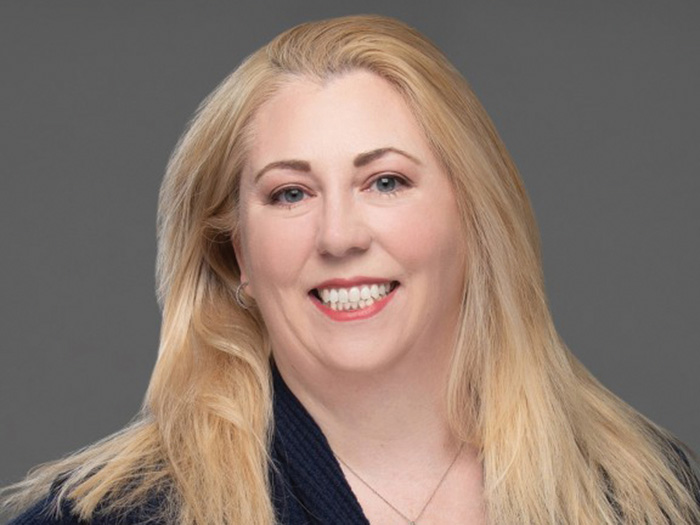
DOUGLAS CAMERON is a partner and practice group leader of the firmwide Insurance Recovery Group at Reed Smith.

February 15, 2011

Copyright 2011© LRP Publications


RISK logo
 

Back to top

Entire contents copyright © 2013 Risk and Insurance® All rights reserved. May not be reproduced in any form without written permission.