Search      Advanced Search | Browse By Topic
Magazine Content
Home
Features
Columnists
Industry Risk Reports
In-Depth Series
Special Reports
Point/Counterpoint
R&I One® Content
News & Analysis
Editor's Choice Stories
Resources and Tools
Power Broker® Directory
Risk InnovatorTM
Emerging Risks
Top Employee Benefits Consultant

Executives To Watch
Insights
Industry Events
WorkersComp Forum
Award Nominations
Webinars
RSS
R&I Information
Subscription Center
Advertiser Information
About Us
Contact Us
 

Newsletter Sign-up

Click on the name of the free newsletter below to preview:

R&I One®
WORKERSCOMP Forum TM Update
HTML Text
E-Mail Address:


Click here to unsubscribe
Privacy Policy
Preferences


Federal law allows state to hear claim by worker injured on Indian reservation

The Minnesota workers' compensation laws have authority over a claim arising out of an injury to a nontribal employee occurring on tribal land.

Print Email Add to Facebook Add to Twitter Add to LinkedIn Write to the Editor Reprints

Case name: Swenson v. Nickaboine d/b/a Northland Quality Builders, No. A10-380 (Minn. 02/02/11).

Ruling: The Minnesota Supreme Court held that the workers' compensation laws could cover a worker injured while working on an Indian reservation.

What it means: The Minnesota workers' compensation laws have authority over a claim arising out of an injury to a nontribal employee occurring on tribal land.

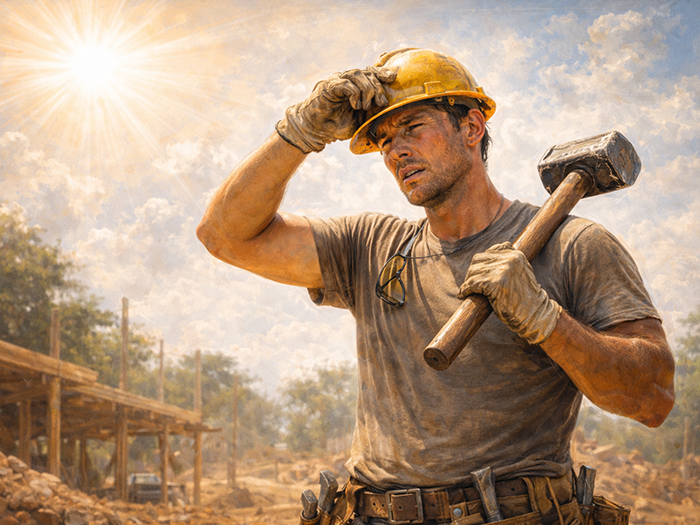
Summary: A worker began working for a member of an Indian tribe on a casino expansion project on the reservation. While working, he injured his back when he missed a step while carrying a heavy toolbox down a flight of stairs. He sought workers' compensation benefits. The employer sought to dismiss his claim, arguing that the state office of workers' compensation did not have jurisdiction over his claim. The Minnesota Supreme Court disagreed, holding that the workers' compensation laws covered the worker's injury.

The employer argued that the Indian reservation was outside the state, and therefore, the worker's injury was extraterritorial. The court disagreed, stating that Indian reservations are commonly considered to be a part of the states in which they are located.

The employer also argued that the construction company entered into a contract with the tribe agreeing to submit to tribal court jurisdiction for dispute resolution. The court explained that employers and employees may not contract out of the applicability of workers' compensation laws. Additionally, the worker was not a party to the contract.

The court further explained that a federal law authorizes states to exercise their workers' compensation laws over federal lands located in the state. Other states extended the law to apply to lands held in trust for an Indian tribe.

A concurring judge would not have held that the federal law gave the state office jurisdiction over the claim. The judge would have granted jurisdiction based on a balancing of the state and federal/tribal interests. According to the judge, the state has a strong interest in ensuring that its citizens receive compensation for their injuries.

Read more at the WorkersComp Forum homepage.

March 21, 2011

Copyright 2011© LRP Publications


RISK logo
 

Back to top

Entire contents copyright © 2013 Risk and Insurance® All rights reserved. May not be reproduced in any form without written permission.