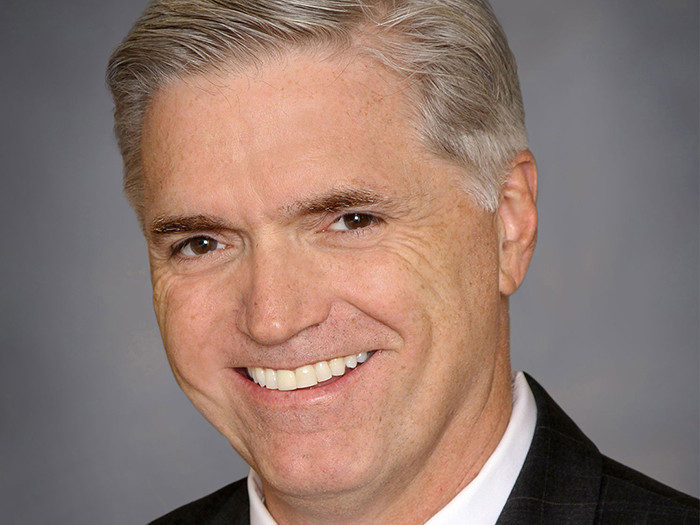
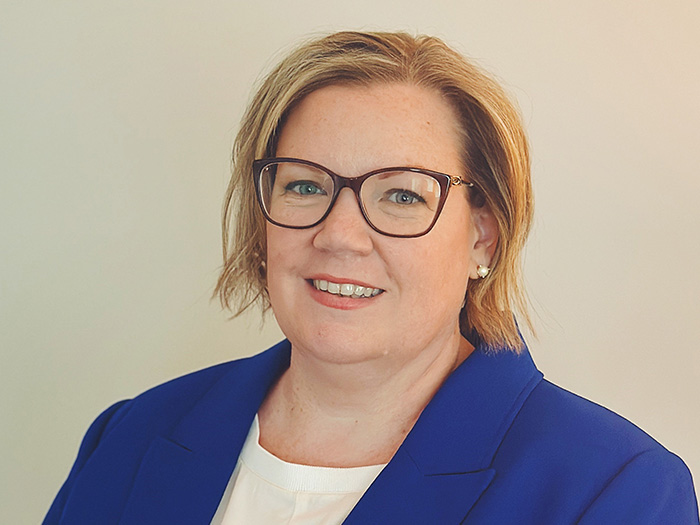
Baker Appointed to Head California's Department of Industrial Relations

Judging from the endorsements she's received from many factions of the state's workers' comp system, she'll have a wide degree of support from the industry.
Baker served as the executive officer of the California Commission on Health and Safety and Workers' Compensation from 1994 until last month when she was named chief deputy director of the Department of Industrial Relations, the California agency that oversees the Division of Workers' Compensation.
Q: What are your thoughts as to where the California workers' comp system stands at this point in time?
A: I think there are still unnecessary costs, and we can see those emerging as we see costs rising again -- that's the medical, friction, and administrative [costs] that are still very, very high compared to the benefit that's going to the injured worker.
The permanent disability benefit, for all its controversy, is only about one-fifth the cost of benefits. With the savings obtainable in medical costs and frictional costs, the permanent disability benefit can be improved without net cost to employers.
We need to bring the unnecessary costs down on the medical benefit, including some of the unnecessary administrative costs in delivering that benefit. Medical costs continue to rise while benefits to injured workers still remain low. For example, the increasing use of pharmaceuticals and compound drugs are some of the pressure points in the system.
Q: What about recent reports that workers' comp frequency in California may be increasing? Do you think that may be indicative of a trend?
A: I think it's too soon to tell. One has to look at it in the context of whether we are growing again in terms of the economy. So it's too soon to tell.
Q: What do you see as ways to improve the state's workers' comp system?
A: It will be up to both labor and management to identify areas that they can reach agreement on. Of course, it is up to Gov. Brown and the Legislature. Liens are a problem, as California has 350,000 liens yearly, and growing so it is a very costly process. The litigation costs and administrative costs are very high. So there's enough unnecessary costs in the system that can be saved to offset a benefit increase if that were to be proposed.
Q: How will the support you've received from labor and management help you in your new role?
A:
The model that was created by the Commission on Health and Safety and Workers' Compensation of working together with labor and management to find the win-win can be used in all the areas this department covers because, frankly, our mandate here is to serve wage earners, improve working conditions, and advance opportunities for profitable employment. So it's that balance between labor and management. We intend to streamline and run a very tight ship.
Q: What do you see as your initial responsibilities?
A: I've been asked by Gov. Brown through Labor Secretary Morgenstern to look at areas in which we can streamline, break down silos, improve service, and, if duplication or overlapping functions exist, consolidate. We need to look at how we can do a whole lot more with less. I'm not worried about that at all. I think that if we make use of technology, there are really effective ways of bringing compliance through the system.
Q: What are some examples where technology can be used?
A: A strong, strong goal is to reduce the underground economy by finding employers paying cash for wages or having workers work without paying taxes, reporting them to the Employment Development Department, and getting coverage for workers' comp. That makes a fair playing field for all employers, especially small employers. That's where the problem is most prevalent.
By matching records between the EDD and the Rating Bureau to see where people report payroll, we can identify employers who are not covered. Then we can send letters and get compliance. Many comply after the first letter. They may not have known about compliance. These are small businesses. It's a really effective program. Uninsured employers are a huge problem for the state and a huge problem for the workers who get injured because the process of trying to get benefits is much more cumbersome.
Read more at the WorkersComp Forum homepage.
May 16, 2011
Copyright 2011© LRP Publications