Search      Advanced Search | Browse By Topic
Magazine Content

Home
Features
Columnists
Industry Risk Reports
In-Depth Series
Special Reports
Point/Counterpoint
R&I One® Content

News & Analysis
Editor's Choice Stories
Resources and Tools
Power Broker® Directory
Risk InnovatorTM
Emerging Risks
Top Employee Benefits Consultant
Executives To Watch
Insights
Industry Events
WorkersComp Forum
Award Nominations
Webinars
RSS
R&I Information
Subscription Center
Advertiser Information
About Us
Contact Us
 

Newsletter Sign-up

Click on the name of the free newsletter below to preview:

R&I One®
WORKERSCOMP Forum TM Update
HTML Text
E-Mail Address:


Click here to unsubscribe
Privacy Policy
Preferences


The Main Ingredients

Keen analytical skills are at the heart of any underwriting success today just as they were in 1653. Introverted numbers nerds need not apply, however.

By Steve Tuckey

Print Email Add to Facebook Add to Twitter Add to LinkedIn Write to the Editor Reprints

Little did those hearty souls in Mr. Lloyd's coffee shop know more than 350 years ago when they wrote their names under a ship's manifest indicating how much cargo they were insuring that they were christening a profession that today employs more than 100,000 men and women in the United States alone, according to the U.S. Bureau of Labor Statistics.

But who are these people known as underwriters who today perform the one job that existed before all others in the insurance industry? (Unless you count the venture capitalists presenting the manifests, who might be called the precursors of those folks gathering in San Diego this month). After all, it is hard to process a claim if you don't approve the risk first.

While actuaries have their stereotypical attributes and have often served as punchlines at insurer gatherings, underwriters represent something of an amalgam of traits that remain hard to pin down.

The numbers-crunching aspect goes hand in hand with the hail-fellow-well-met requirements more normally associated with brokers and the sales side of the business they represent.

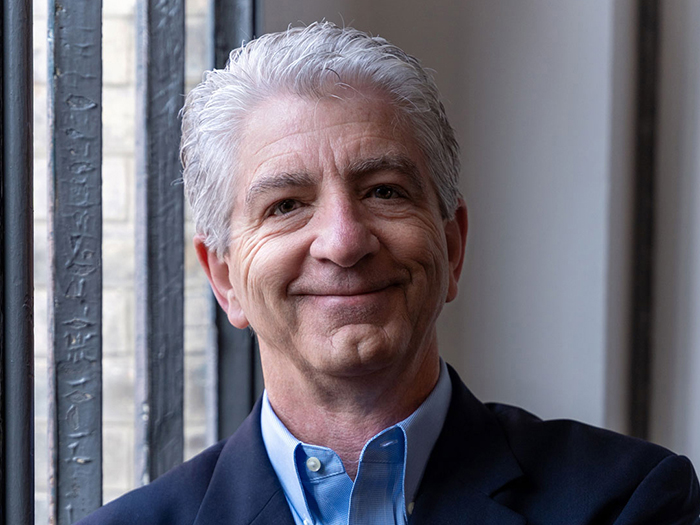
James Britt today serves as president of the Chartered Property Casualty Underwriters Society. And while he has spent the past 22 years as a broker, first with a regional broker and now with Marsh, his heart seems to be with the profession whose professional society he now guides. When he thinks of the insurance underwriting profession, the first word that comes to mind is "skepticism."

"I would say the core characteristics of an underwriter are to be quick on your feet," he says. "The first taste of an opportunity you will get will be a telephone call from an agent or broker, or in the case of a direct carrier, your field rep will call in," he says.

Digesting such limited data in a short amount of time to determine if the risk is worth pursuing requires a certain skill set.

"You don't always have to have your 'glass half empty,' but you have to have an element of skepticism. You are looking for as much discovery as you can reasonably expect to get to make an informed decision on selecting the risk," he says. "And then you have to decide to what extent you want to extend coverage, either in a narrow or very broad way, and then price it."

While brokers may not necessarily gloss over certain risks to get the business, "they may have limited information, and so you have to get more data to make an informed decision," Britt says.

Large commercial risks often times have history behind them, which an underwriter has to take into account, while at the same time not be hidebound to it if it is not always favorable. "So the question becomes 'what's different?' and why should I be interested in this now?" he says.

SECOND THROUGH THE DOOR

What first appealed to Britt as an underwriter was being in an indirect business-to-business relationship. His company at the time, Aetna Life & Casualty Co., was among the large stock companies that sold through brokers and not directly to customers.

"Although the carriers at the time dealt with the public with claims, loss control, the relationship was distributed and engagement was made with agents and brokers. I kind of liked that idea of being a 'second through the door,' so to speak," he says. "But I realized after I had been in that field for 16 years I really wanted to have that direct relationship, and the brokerage business appealed to me."

Carriers such as Hartford, USF&G and Aetna topped the field of those hiring college grads without business backgrounds decades ago and providing first-class training for underwriters.

"But they (the new hires) had good thinking and communication skills, and they put them through rigorous training," he says.

Britt says he immediately signed up for the CPCU program, which gave him the "equivalent of a master's degree in insurance."

There remains much more industry alignment in the large companies' underwriting operations today than in the past. "For example, if you are going to underwrite the real-estate business, you better know the real-estate game," he says.

In the past, many carriers specialized in certain fields and, at companies that were generalists, such as Aetna, underwriters were segmented by size of risk rather than the field of risk.

Carriers with a sizable risk present new challenges for the underwriter that go beyond coverage to the development of intricate structures that include large deductibles and self-insurance and, therefore, require a more sophisticated skill set.

A broker oftentimes will bring the underwriter to the board to make a presentation on a new offering and renewal, which in turn requires a new set of communication skills.

"If you are going to play in the big stakes game, you are going to have to have communication skills that go beyond your ability to communicate with an agent or broker," Britt says.

"The larger the risk," he adds, "the more likelihood there will be a triangular relationship with the broker, carrier and the insured."

CULTURE VULTURES

Underwriting cultures vary from carrier to carrier, with some carving out difficult risks and then trying to gain enough market share to make it worthwhile, while others will stick to relatively benign risks and offer a competitive enough price to make a profit. "And they have particularly strong relationships with the agencies they do business with," he says.

Underwriters have an obligation to check out the culture of a company before they sign on.

"When you see people leaving a company, but they are still very capable people and have a good reputation, quite often they will be leaving because the culture is changing," Britt says. "Maybe the ownership has changed, or the leadership has changed and it takes the company in a new direction."

With years as both broker and underwriter, Britt sees the main difference as the former having to serve the client (the insured) to the greatest extent possible, while the underwriter serves the culture and mission of his employer.

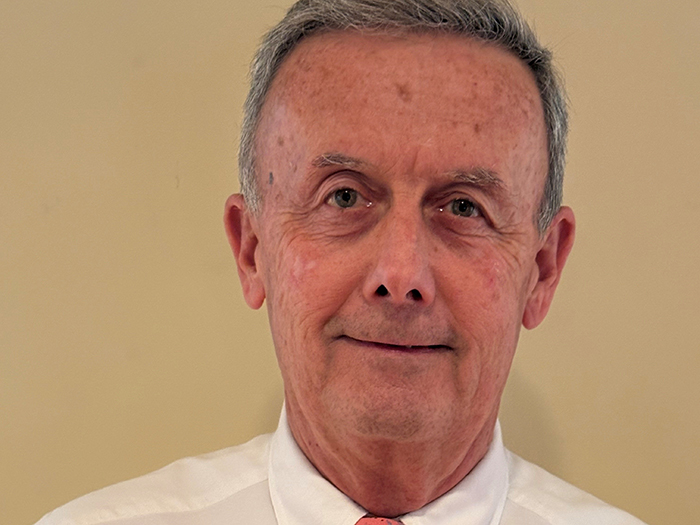
Aaron Jacoby, vice president, corporate development, for RLI Corp., specializes in finding experienced underwriters to head up new product teams as the company branches out to cover new areas.

"Although underwriting is about risk-taking, it is almost as much about risk-avoiding," he says. "So the kind of personality that works best for us is the kind that worries 24/7 about the risks they are writing."

But then again, risk aversion can be taken too far for any company that makes its profits from covering risk. "What you need are people with almost a dual mindset who will seek out risk but spend a lot of time worrying about it," he says.

The job goes beyond going over an application and putting some numbers in a spreadsheet. "It is also knowing which account you will never write because it is not a good risk," Jacoby says.

Most recently, RLI started up a marine unit that includes coverages such as hull and cargo.

"The people we hired to start that business came from an actual marine background and graduated from the U.S. Merchant Marine Academy," he says.

After spending their 20s on ships learning the marine business, they went back to business school for an insurance underwriting career.

"It seemed like a natural fit because of the close ties of the shipping and insurance industries," says Jacoby. "After all, that is how insurance was invented."

Brokers and underwriters work closely together for the ultimate good of their temporary joint enterprise if you will, but do inherently conflict with one another.

"We like to say a broker's job is not to make us money," Jacoby says. "The underwriter's job is to make us money."

PAY THE MAN

Compensation methods play a key role in attracting certain types to certain roles. Brokers have pay tied more closely to performance than underwriters, although that is gradually evolving with the controversy over the years stemming from contingent compensation.

It would seemingly behoove carriers to tie underwriters' compensation more closely to the results of their book. "It has been something the companies have talked about for long periods of time, but it is very difficult to do in the insurance industry because of the long-tail nature of the results," he says.

Jacoby says the solution is to look at multiyear periods when evaluating profitability. Then base bonuses on that. "We think it is the most critical ingredient to make sure that their interests are aligned with ours," he says.

Even more important for underwriters is the avoidance of any bonus incentives tied to premium volume. "The minute you tell someone they have to grow 10 percent, they may look to the growth in premium as more important than the growth in profit," he says.

Advances in underwriting technology have helped blunt the need for what Jacoby termed "just adding bodies."

"We are also making improvements in the data that the underwriter is collecting to make them better underwriters," he says.

Jacoby insists that such technology merely helps relieve a lot of the administrative burden and does not reduce the underwriter to being merely a button-pusher.

"They are still making individually underwritten decisions. It is not just a computer that is spitting out a quote," he says.

Cutting back on administrative tasks also spares the brokers' time to allow more interaction and ultimately marketing activities with the brokers.

"This is still a very relationship-driven business," he says. "If you have an underwriter just doing administrative work, they are not tending to their customers."

As for the kind of personality best suited for underwriting, Jacoby says "it really runs the gamut." While you need certain technical and numbers skills, the fact remains that you also need social and interpersonal skills because so much in insurance grows from relationships with producers.

When you ask Alan Jay Kaufman, CEO of Burns & Wilcox, the first trait that he lists is "strong people skills."

"You develop relationships with people, and they have confidence in you," he says.

As a specialty wholesaler, Burns & Wilcox looks at the kind of risks that others may have turned down.

"So what we need are underwriters who can think outside the box and figure out how we can cover this risk rather than finding reasons to turn it down," he says.

In a wholesale agency, brokers and underwriters work side by side. The latter have the proverbial pen. Brokers scour the landscape looking for markets. Even those with the pen have to make sure their reputation stays intact through the years or their carriers will ask for the pen back.

"So what you need is a certain tenacity and competitiveness. The characteristics are somewhat the same, but the broker is probably more competitive and has to do more shopping because the broker is handling a greater multitude of companies," he says.

STEVE TUCKEY has written on insurance issues for a decade for several national media outlets.

April 15, 2008

Copyright 2008© LRP Publications


RISK logo
 

Back to top

Entire contents copyright © 2013 Risk and Insurance® All rights reserved. May not be reproduced in any form without written permission.